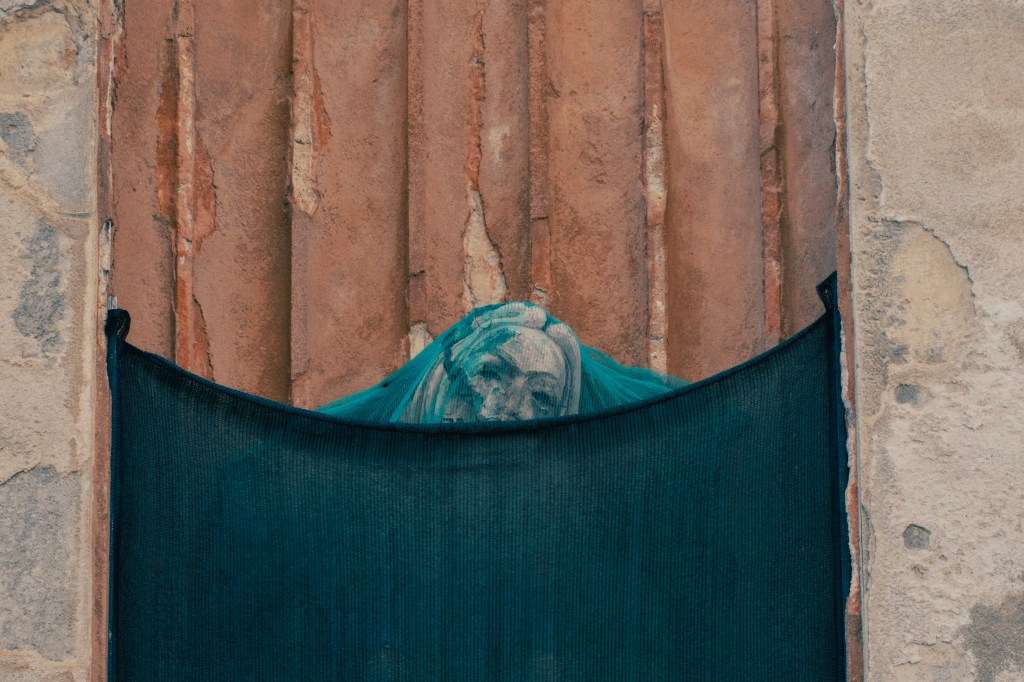
If you read the previous article, you’ll know that June 3rd of this year marked the start of a new phase for me: that of an amateur photographer sharing his creations. I don’t know how good these ‘creations’ actually are, but I’ll address that later. The point of this article is simply that it’s time to get organized.
I’ve made a few decisions recently—even before that fateful June 3rd.
First: cancelling my Adobe account and, consequently, Lightroom Classic and Photoshop. For a few months now, I’ve been using exclusively Photomator, for which I bought an annual subscription for 35 euros.
Second: ruling out advanced image-editing software. To put it simply: no Photoshop or similar applications. The idea is to use Photomator for what it is—a digital substitute for the good old darkroom. It works quite well and will surely improve in the future regarding stability and speed. Even now, however, it offers solutions and tools that are extraordinarily effective for an old amateur photographer like me—someone who used to spend hours making black-and-white prints just to get a couple of decent ones.
Third: giving up analog photography. No more film, developing, D-76, or C-41. Photography is, all in all, too beautiful, complex, and subjective art form to complicate one’s life with film. That said, I might still dig out some old rolls of film, digitize them via camera scanning, and invert the images using FilmLab (which I’ve also purchased and have installed on my computer). But no new film or analog shots. Why? Prohibitive costs, long turnaround times, and technology that is truly obsolete by now.
Fourth: many years ago, I bought an Olympus camera—the OM-D E-M10 Mark II. It was already out of production at the time. Aside from its 16-megapixel resolution, it is an extraordinarily versatile camera. I also picked up a 60mm f/2.8 macro lens, which is, objectively speaking, an excellent piece of glass. The Four Thirds system works perfectly for me (camera and three lenses in a tiny bag that fits inside my backpack), and 16 megapixels is plenty for any photography I want to do.
Since I had paid very little attention to the “photography world” since 2018, I had to play catch-up and hit the books again. Two YouTube channels really helped me out:
https://www.youtube.com/@riflessionifotografiche
https://www.youtube.com/@otnol
I’d like to thank them. Through them, I quickly realized that the landscape of photography had changed completely—only to circle back to the same old issues. I realized that, despite everything, photographers still fall into two camps: those who buy gear and those who actually take pictures.
Damiano, Roberto, and Alessio taught me about two major “real” developments and one amusing absurdity.
First: The shutter speed/aperture “dyad” has expanded into a triad that includes ISO. This is such a modern concept that my Olympus doesn’t even have a dedicated ISO dial; I had to configure it myself.
Second: Lenses perform best at wide apertures.
Third: For new photographers, f/16 is considered a “dark” aperture. Sorry, but that just cracked me up.
Now I have guardrails defining my path. It is a near-zero-budget journey, yet it clearly frames what I want to do: look, see what others don’t, and share it.

